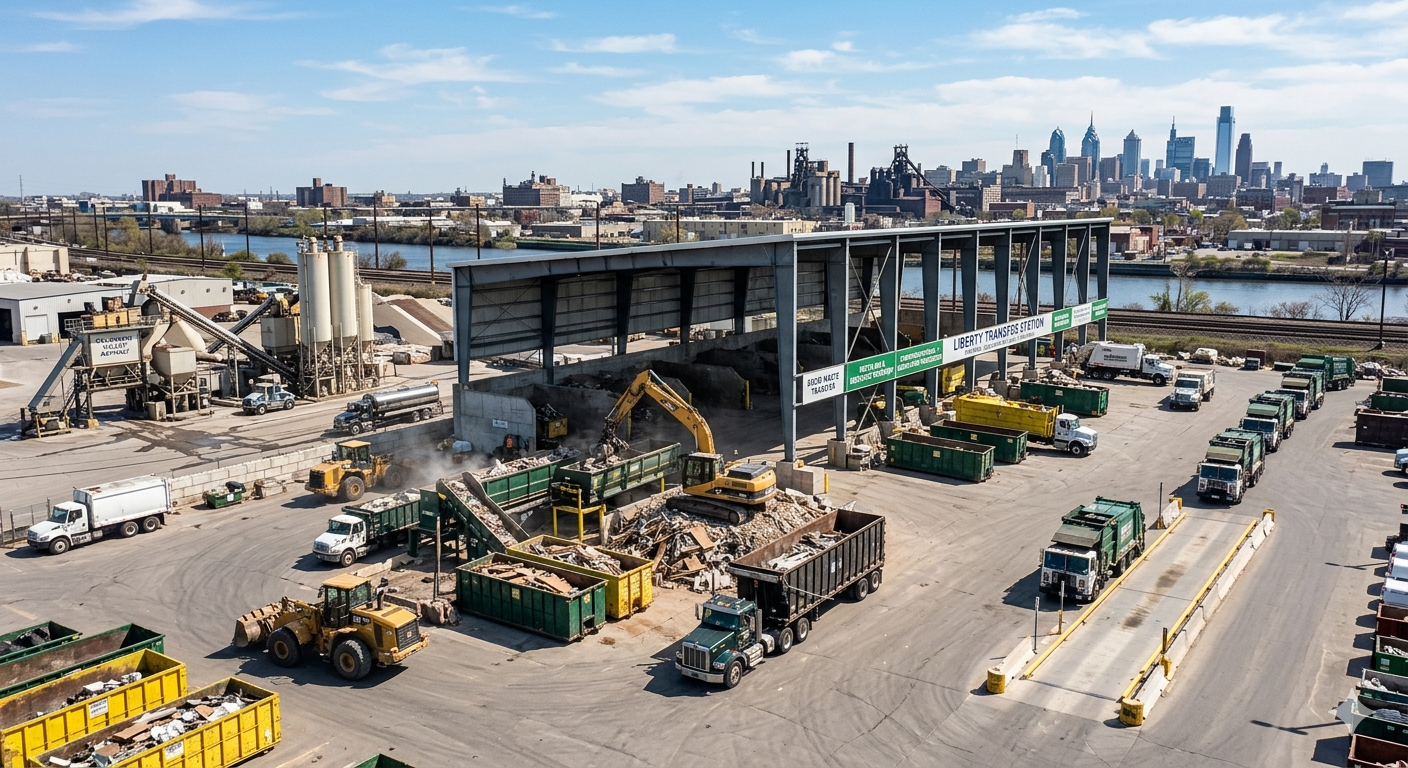
In the bustling industrial landscape of Philadelphia, where history and modern infrastructure collide, few facilities…
Managing waste efficiently is one of the most overlooked aspects of running a successful business. Whether you manage a boutique retail shop, a bustling full-service restaurant, a corporate office park, or a massive industrial warehouse, your daily operations generate trash.
Choosing the wrong waste container can quietly drain your company’s resources. Pick a container that is too small, and you will face unsightly overage fees, overflowing debris that deters customers, and the logistical headache of scheduling frequent emergency pickups. Pick a container that is too large, and you are essentially paying to haul away empty air every single week.
Finding the optimal setup requires balancing physical space constraints, local regulatory compliance, weight restrictions, and the exact volume of your weekly waste stream. This comprehensive guide breaks down standard commercial dumpster sizes, explores specific operational use cases, and reveals how to determine the perfect match for your organization.
Understanding Permanent Commercial Dumpsters vs. Temporary Roll-Offs
Before reviewing dimensions, it is essential to distinguish between the two primary categories of business waste containers: front-load/rear-load dumpsters and roll-off dumpsters.
- Front-Load and Rear-Load Dumpsters (Permanent Service): These are the permanent, compact steel bins parked behind restaurants, offices, and retail complexes. They are designed for ongoing, daily trash collection and are routinely emptied by garbage trucks equipped with hydraulic forks. They range in size from 2 to 8 cubic yards.
- Roll-Off Dumpsters (Temporary/Project-Based): These are large, open-top rectangular boxes delivered to a site for short-term projects, such as an office remodel, a deep inventory cleanout, or major construction work. They range from 10 to 40 cubic yards and are hauled away entirely when filled.
Note: This article focuses primarily on finding the best size for permanent, ongoing commercial services.
Permanent Commercial Dumpster Sizes and Dimensions
Permanent commercial dumpsters are measured in cubic yards, which represents the total volume of waste the bin can safely hold. Below is a breakdown of the four industry-standard sizes used for recurring business pickup schedules.
1. The 2-Yard Commercial Dumpster
The 2-yard container is the smallest permanent commercial bin available. It occupies a minimal physical footprint, making it incredibly easy to position in tight alleyways, small parking lots, or compact loading bays.
- Average Dimensions: 3 feet long x 6 feet wide x 3 feet high
- Trash Bag Capacity: Holds roughly 12 to 15 standard, heavy-duty (30-gallon) trash bags
- Weight Limit: Typically caps out at 400 pounds
- Best Suited For:
- Small professional offices (law firms, insurance agencies, tech startups) with fewer than 25 employees.
- Boutique retail stores and clothing shops that generate mostly cardboard and paper packaging.
- Micro-cafes or coffee shops with limited seating and low food-waste volume.
2. The 4-Yard Commercial Dumpster
Often considered the mid-sized workhorse of commercial waste management, the 4-yard dumpster offers double the volume of a 2-yard container while occupying only slightly more ground space. It strikes an excellent compromise between capacity and a modest physical footprint.
- Average Dimensions: 4 feet long x 6 feet wide x 4.5 feet high
- Trash Bag Capacity: Holds roughly 24 to 30 standard trash bags
- Weight Limit: Typically handles up to 800 pounds
- Best Suited For:
- Medium-sized offices employing 50 to 75 individuals.
- Small grocery stores, bakeries, or convenience stores.
- Moderate-volume restaurants that don’t produce heavy bulk items.
- Stand-alone retail shops occupying less than 5,000 square feet.
3. The 6-Yard Commercial Dumpster
A 6-yard dumpster is designed specifically for high-volume waste producers. Because it stands roughly 5 feet high, it often requires a designated, secure concrete enclosure separated from regular parking spaces to maintain property aesthetics and safety.
- Average Dimensions: 5.5 feet long x 6 feet wide x 5 feet high
- Trash Bag Capacity: Holds roughly 36 to 45 standard trash bags
- Weight Limit: Typically handles up to 1,200 pounds
- Best Suited For:
- Large corporate office buildings or multi-tenant business plazas.
- Busy, full-service restaurants and high-turnover dining establishments.
- Strip malls with shared waste areas for multiple retail tenants.
- Light manufacturing facilities and small distribution warehouses.
- Medium-sized apartment or condominium complexes.
4. The 8-Yard Commercial Dumpster
The 8-yard container is the largest standard front-load commercial dumpster available on the market. It is built to handle massive amounts of daily waste and bulkier materials.
- Average Dimensions: 6.5 feet long x 6 feet wide x 6 feet high
- Trash Bag Capacity: Holds roughly 48 to 60 standard trash bags
- Weight Limit: Typically caps out around 1,500 pounds
- Best Suited For:
- Large distribution hubs and e-commerce shipping facilities.
- Large hotels, resorts, and convention centers.
- High schools, universities, and expansive institutional campuses.
- Large-scale grocery stores and supermarkets.
- Offices with up to 500 employees relying on a single collection point.
Key Factors in Choosing the Right Dumpster Size
Determining which size is best for your specific business involves evaluating a few overlapping logistical details.
1. Type of Waste and Density
The material you discard dictates both the size of the container and your collection schedule. For example, a 4-yard dumpster filled with loose office paper weighs significantly less than a 4-yard dumpster filled with heavy, wet organic food scraps from a restaurant kitchen. If your waste is dense and heavy, you must monitor weight limits carefully to avoid costly over-weight penalties from your carrier, even if the bin isn’t physically overflowing.
2. Available Space and Location Constraints
Before ordering a dumpster, measure the exact location where it will sit. You must factor in:
- Enclosures: Ensure your concrete pad or brick enclosure can handle the outer dimensions of the container with enough room for employees to open the lids safely.
- Truck Clearance: A front-load garbage truck needs ample vertical clearance (often 14 to 18 feet) to raise its forks and dump the container. Avoid placement under low-hanging tree branches, power lines, or building overhangs.
- Turning Radius: The truck must have a clear, unblocked path to back up to or pull directly up to the bin without scraping customer vehicles or property infrastructure.
3. Collection Frequency vs. Dumpster Footprint
There is an inverse relationship between container size and collection frequency. For example, emptying a 2-yard dumpster three times a week provides the same volume capacity as emptying a 6-yard dumpster once a week.
However, if your business handles food waste, leaving a larger dumpster on-site for a full week will lead to pest problems and severe odor issues. In that scenario, a smaller dumpster emptied multiple times per week is a far better choice. Conversely, an office generating inert paper waste can save money by utilizing a larger 6-yard dumpster collected just once a week.
The True Cost of Choosing the Wrong Size
Many business owners try to save a few dollars a month by ordering the smallest possible container, planning to compress the trash down manually. This strategy almost always backfires.
When a dumpster is overfilled and the plastic lids cannot close completely flat, waste management companies routinely assess overage fees. These fees can quickly outpace the monthly cost of simply upgrading to the next container size. Furthermore, exposed trash invites rodents, birds, and insects, creating health code violations and a poor public impression of your business.
On the flip side, over-specifying your container means your capital is tied up in a massive steel box that leaves the property half-empty on pickup day. Finding that sweet spot maximizes your operational budget.
How to Conduct a Simple Waste Audit
If you are still unsure whether a 4-yard or a 6-yard container is right for your daily operations, it helps to conduct a brief, informal waste audit over a two-week period.
- Monitor Your Current Bin: Check your existing trash bin the evening before your scheduled pickup day. Note how full it is (e.g., 25% full, 75% full, overflowing).
- Count the Bags: Keep a loose count of how many standard bags your team throws out each day.
- Identify Bulk Items: Are un-broken-down shipping boxes filling up the volume prematurely? Implementing a strict cardboard recycling program can often allow a business to drop down an entire dumpster size, lowering their overall monthly waste bill.
Streamlining your business waste stream doesn’t have to be complicated. By accurately measuring your physical space, calculating your average weekly bag count, and matching your industry type to the right container, you ensure a clean, compliant, and cost-effective operation. If you need professional assistance assessing your site constraints, optimizing your pickup schedules, or securing the right equipment, explore the comprehensive solutions at Liberty Waste & Recycling to find the ideal waste management strategy tailored directly to your commercial property.
Ready to book your dumpster rental? Follow the link here: START DUMPSTER ORDER
Related Posts