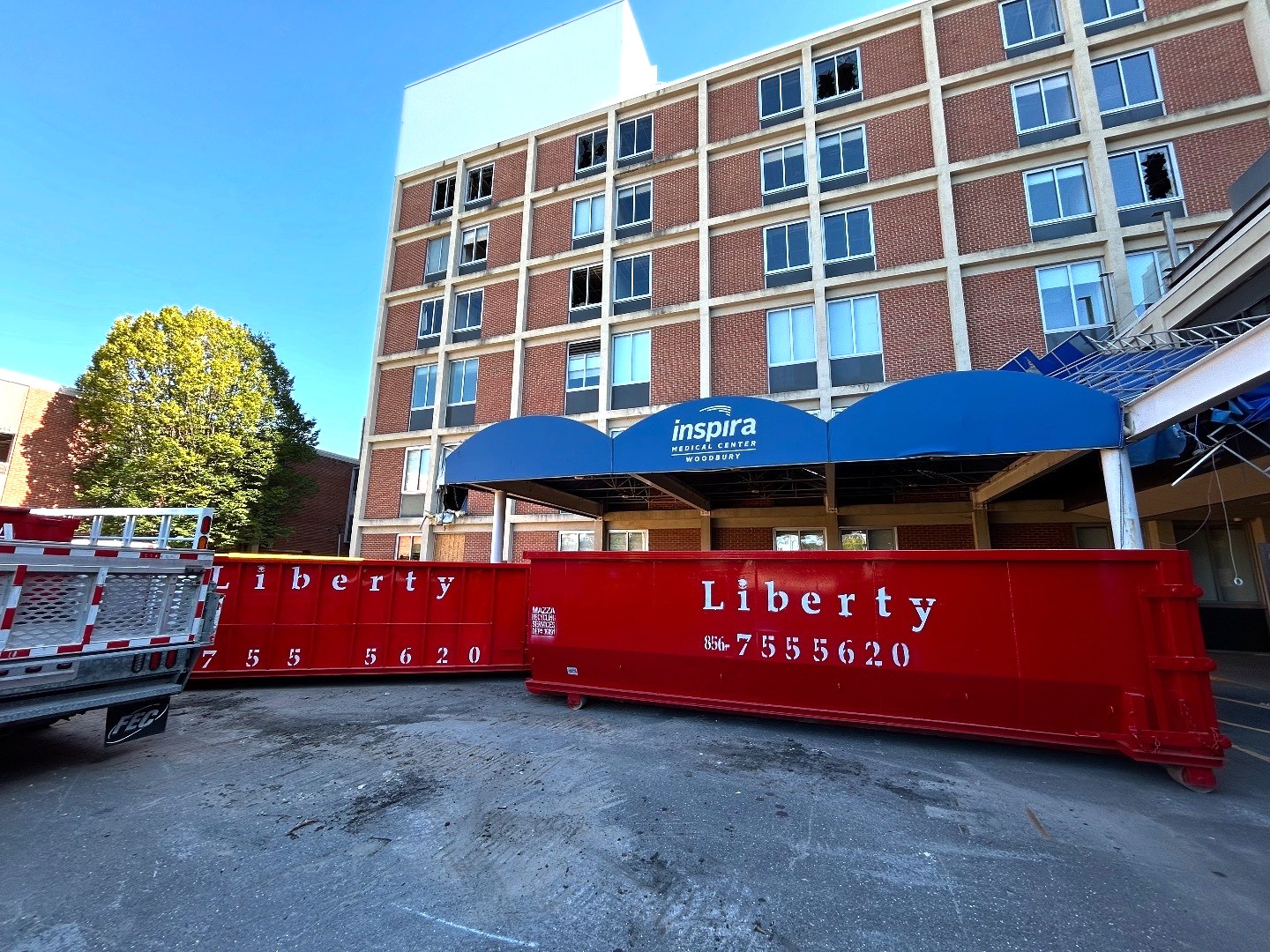
When managing major cleanups, home renovations, commercial builds, or neighborhood junk cleanouts, waste accumulates faster…
Tackling a home renovation, decluttering your garage, or finally tearing up that old backyard deck is an exciting milestone. However, once the dust settles and the physical work begins, you are quickly faced with a major logistical hurdle: what are you going to do with all that trash?
For most residential projects, leaving pile after pile of debris on the curb simply isn’t an option. Local municipal trash collection services have strict limits on bulk waste, and hauling multiple loads to a local landfill yourself consumes valuable time, money, and fuel.
Renting a roll-off dumpster is the most efficient solution for residential waste management. But it brings a critical question that can make or break both your budget and your sanity: What size dumpster is best for residential projects?
Choosing the right size is a delicate balance. Rent a container that is too small, and you will face costly overage charges or the headache of ordering a second “swap-out” dumpster. Rent one that is too large, and you are paying for empty air space that you did not actually need.
In this comprehensive guide, we will break down standard residential dumpster sizes, analyze exactly how much waste each can hold, match sizes to common home projects, and reveal the hidden factors you must consider to choose the perfect container every single time.
Understanding Roll-Off Dumpster Measurements
Before diving into which size fits your specific weekend project, it helps to understand how dumpsters are measured. Dumpster sizes are universally calculated in cubic yards.
A cubic yard is a measurement of volume. One cubic yard is an area that is 3 feet wide, 3 feet long, and 3 feet deep ($3′ \times 3′ \times 3’$). To visualize this, a standard kitchen oven or a major household appliance is roughly equivalent to one cubic yard of space.
Another excellent real-world benchmark is the bed of a standard pickup truck. A regular, full-size pickup truck bed filled completely flush to the top holds about 2.5 cubic yards of material. Keeping this mental image in mind makes it significantly easier to estimate your total waste volume.
The Four Most Common Residential Dumpster Sizes
While commercial dumpsters can scale up to massive sizes, residential dumpster rentals typically fall into four primary categories: 10-yard, 15-yard, 20-yard, and 30-yard containers. Let’s look closely at the physical dimensions, capacity, and ideal use cases for each size.
1. The 10-Yard Dumpster: The Small Project Specialist
The 10-yard dumpster is the smallest standard option available for residential use. It is compact, incredibly driveway-friendly, and designed specifically for minor cleanup tasks or heavy, dense materials.
- Average Dimensions: 10 feet long $\times$ 8 feet wide $\times$ 3.5 feet high.
- Pickup Truck Equivalent: Roughly 3 to 4 full truckloads.
- Weight Limit: Typically ranges between 1 to 2 tons (2,000 to 4,000 lbs).
Best Projects for a 10-Yard Dumpster:
Because it features lower walls (usually around 3.5 feet high), a 10-yard container is very easy to load over the sides. This makes it perfect for dense, heavy debris that would quickly exceed the weight limits of larger containers.
- Small bathroom or kitchen remodels: Tearing out a small vanity, toilet, old flooring, and drywall.
- Garage or basement decluttering: Getting rid of old boxes, broken sports gear, small furniture pieces, and general junk accumulated over a few years.
- Heavy debris disposal: If you are removing concrete, brick, dirt, sand, asphalt shingles, or tile, a 10-yard dumpster is often mandatory. Larger dumpsters filled with these materials become too heavy for a standard truck to safely lift and haul away legal road limits.
2. The 15-Yard Dumpster: The Perfect Middle Ground
If you are worried that a 10-yard container is just a bit too tight but you do not want to sacrifice precious driveway space for a giant bin, the 15-yard dumpster is your ideal compromise. It offers a generous boost in volume while retaining a remarkably compact physical footprint.
- Average Dimensions: 12 feet long $\times$ 8 feet wide $\times$ 4.5 feet high.
- Pickup Truck Equivalent: Roughly 4 to 6 full truckloads.
- Weight Limit: Typically ranges between 1.5 to 2.5 tons.
Best Projects for a 15-Yard Dumpster:
- Single-room renovations: Perfect for mid-sized bedrooms, flooring replacements across multiple rooms, or complete updates to a standard kitchen.
- Roofing replacements: Ideal for containing asphalt shingles from small to mid-sized homes (up to roughly 2,500 square feet of roofing material).
- Attic or estate cleanouts: Clearing out a packed attic space or sorting through furniture and personal belongings during a minor downsizing transition.
3. The 20-Yard Dumpster: The Gold Standard for Homeowners
If there is one size that holds the title of the absolute best, most versatile residential dumpster, it is the 20-yard dumpster. It is the undisputed industry workhorse for residential waste removal. It provides an optimal balance of vast interior volume and manageable exterior dimensions that fit comfortably inside a standard two-car driveway.
- Average Dimensions: 22 feet long $\times$ 8 feet wide $\times$ 4.5 feet high.
- Pickup Truck Equivalent: Roughly 8 to 10 full truckloads.
- Weight Limit: Typically ranges between 2 to 3 tons (4,000 to 6,000 lbs).
Best Projects for a 20-Yard Dumpster:
- Large kitchen or multiple room remodels: Tearing down walls, removing cabinetry, discarding countertops, and pulling up extensive flooring simultaneously.
- Whole-house cleanouts: Clearing out large amounts of furniture, old appliances, mattresses, and decades of accumulated clutter from a multi-bedroom home.
- Decks and outdoor structures: Disposing of lumber from a torn-down backyard deck, fencing material, or a dilapidated wooden shed.
- Carpet or flooring removal: Ideal for hauling away large volumes of thick carpeting, underlayment, or hardwood flooring from a large house.
4. The 30-Yard Dumpster: For Major Transformations
The 30-yard dumpster is typically the largest container recommended for residential properties. It is a massive bin designed to handle substantial volume. Before ordering this size, you must ensure your driveway has ample length and clearance to accommodate it.
- Average Dimensions: 22 feet long $\times$ 8 feet wide $\times$ 6 feet high.
- Pickup Truck Equivalent: Roughly 12 to 15 full truckloads.
- Weight Limit: Typically ranges between 3 to 5 tons.
Best Projects for a 30-Yard Dumpster:
- Major home additions or construction: Large-scale home structural changes, window replacements for an entire house, or new garage construction.
- Total estate cleanouts: Clearing out a highly hoarded property or an entire multi-story home filled with large, bulky furniture items.
- Extensive landscaping projects: Clearing massive amounts of brush, tree branches, stumps, and yard waste from major land clearing.
Why the 20-Yard Dumpster is Usually the Best Residential Choice
While every project has its own unique demands, if you are truly torn between two sizes, always size up. For the vast majority of residential cleanups and renovations, the 20-yard dumpster represents the safest and most economical choice.
Homeowners consistently underestimate the volume of their waste. Debris in a dumpster is rarely packed perfectly flat; instead, it creates odd angles, bulky voids, and awkward air pockets. Furniture legs, broken drywall sections, and twisted lengths of old carpet do not stack neatly like building blocks.
If you rent a 10-yard or 15-yard dumpster and find yourself overflowing by just a few cubic yards, you cannot simply pile the trash higher than the rim of the dumpster. Haulers are legally forbidden from transporting “overfilled” containers due to extreme road hazards.
To fix this, you would have to pay for a “swap-out”—meaning the company hauls the full dumpster away and drops off a brand new one, effectively doubling your rental costs. Spending a small fraction more upfront to secure a 20-yard container shields you from this costly mistake and ensures your project finishes without delay.
Crucial Variables to Evaluate Before Placing Your Order
Choosing a dumpster size is about more than just matching a box to a pile of trash. To prevent unexpected fees, property damage, or delivery failures, take a few minutes to evaluate these four hidden variables:
1. Volume vs. Weight
This is the most common pitfall for first-time renters. Every dumpster has a physical volume limit (how high you can pile things) and a legal weight limit (how much the contents can safely weigh).
Materials like cardboard, old clothes, plastic toys, and generic household junk are high-volume but low-weight. You can fill a 20-yard dumpster to the brim with these and remain well under the weight limit.
Conversely, materials like dirt, concrete, bricks, stone, ceramic tile, and plaster are low-volume but extremely high-weight. A modest pile of broken concrete can easily max out a truck’s lifting capacity while only taking up a small portion of a 10-yard dumpster. Always communicate the exact type of waste you are throwing away to your provider so they can guide you toward a size with an appropriate weight rating.
2. Available Driveway and Property Space
You must ensure that your property can physically accommodate the delivery vehicle and the dumpster container itself. A standard 20-yard or 30-yard roll-off dumpster requires a long, flat, clear area.
- The Delivery Footprint: The truck delivering the container needs a straight approach. Think about low-hanging tree branches, power lines, or roof overhangs that could obstruct a massive truck bed tilting upward to slide the dumpster into place.
- Driveway Safety: Dumpsters are heavy steel boxes. When placed directly on asphalt or concrete driveways, they can cause scratching or cracking under intense weight pressure. Professional haulers recommend placing sturdy wooden planks (like plywood or $2 \times 4$ boards) on your driveway for the dumpster rollers to rest upon, distributing the weight evenly and protecting your driveway.
3. Local HOA and Municipal Restrictions
If your home is governed by a Homeowners Association (HOA), you must consult their bylaws before booking a rental. Many HOAs have strict regulations governing:
- How many days a dumpster can sit visible on a driveway.
- The maximum size or color allowed.
- Where on the property it can be placed.
Similarly, if you do not have a driveway and need to place the dumpster on a public street or curb, you will almost always need to secure a temporary street permit or right-of-way permit from your local city or township office ahead of time.
4. Prohibited Materials
No matter what size dumpster you select, there are strict environmental regulations regarding what can safely go inside. Before tossing items blindly into your container, be aware that the following items are universally prohibited or require specialized processing:
| Prohibited Material Categories | Common Examples |
| Hazardous Waste | Paint cans (liquid), oils, fuels, solvents, chemicals, pesticides, propane tanks. |
| Electronics & Appliances | Televisions, computer monitors, refrigerators, air conditioners (due to Freon coolant). |
| Automotive Items | Car batteries, engine blocks, heavy equipment parts, old rubber tires. |
Streamline Your Next Cleanup Project Cleanly
Selecting the absolute best dumpster size doesn’t have to feel like a high-stakes guessing game. By taking a proactive look at your project scope, understanding the physical dimensions of the container, and prioritizing a slight volume buffer over a tight squeeze, you can guarantee a seamless cleanup experience.
When you are ready to kick off your next home improvement project or clear out unwanted clutter, partner with an affordable, transparent, and incredibly reliable disposal team. You can easily view available sizing choices, review weight allowances, and quickly secure a dumpster rental directly through libwaste.com to ensure your property remains safe, clear, and perfectly organized from start to finish.
Ready to book your dumpster rental? Follow the link here: START DUMPSTER ORDER
Related Posts